


 English
 中文简体
中文简体 Español
what's the difference between a jacket and a: Practical Applications, Selection
If you have ever stood in a store holding a sweater in one hand and a jacket in the other, wondering why anyone would need both, you are in good company. We have been knitting sweaters in Changshu for years, and this is one of the questions we hear most often. The short answer is that a sweater is a knitted garment you wear as a layer, while a jacket is a structured outer piece built to protect you from the weather. The longer answer is more interesting, and it explains why most wardrobes end up needing both.
Content
The Short Answer
A sweater starts life as yarn. Knitting machines loop that yarn into rows of interlocking stitches, and those loops trap air, which is exactly what makes a sweater feel soft and warm against the skin. A jacket is built differently. Panels of woven or bonded fabric are cut and sewn together, usually with a lining and a closure such as a zipper, buttons, or snaps, so the finished piece holds its shape and blocks wind and rain far more effectively.
Put simply, a sweater insulates and a jacket shields. That single distinction explains most of the other differences you will notice.
- Construction: sweaters are knitted from yarn; jackets are woven fabric cut and sewn into panels.
- Main job: sweaters keep body heat in; jackets keep weather out.
- Shape: sweaters stretch and drape with you; jackets hold a structured silhouette.
- Where they belong: sweaters work indoors and as mid-layers; jackets are the outermost layer outdoors.
What Makes a Sweater a Sweater
Knitted loops, not woven threads
A woven fabric is built from warp and weft threads crossing at right angles, which makes it stable and fairly firm. A knit is a single yarn looping through itself row after row, which gives the fabric its stretch. That stretch is why a sweater can follow the curve of a shoulder or a sleeve without darts and stiff seams, and it is also why a sweater can simply be pulled on over the head.
The yarn decides almost everything
Wool, cashmere, cotton, acrylic, viscose, and blends all behave differently. Wool holds warmth even when damp, cotton breathes well but loses insulation once it is wet, and synthetic fibers add durability and shape retention. Yarn choice affects weight, drape, pilling resistance, and how the garment feels on the body, which is why the same silhouette can feel completely different from one supplier to the next. You can read more about yarn composition and performance in knitted sweaters if you want the technical detail.
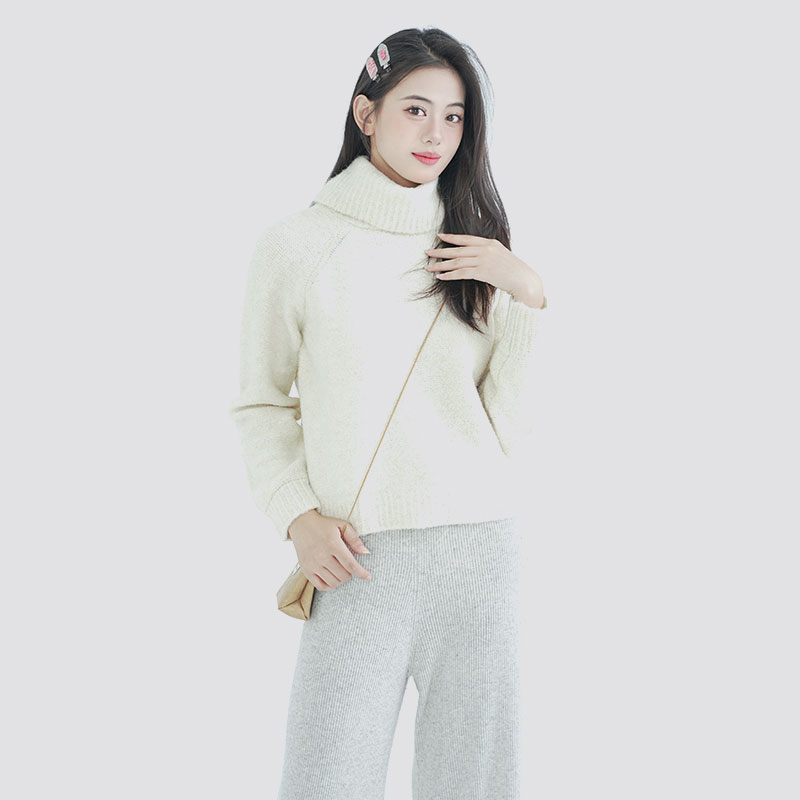 Off-white turtleneck long-sleeved pullover sweaterChangshu Sofia sweater Co., Ltd. was founded in 2006, with a building area of 9600 square meters. There are 150 employees. The company mainly produces children, men's,...View Product →
What Makes a Jacket a Jacket
A shell, a lining, and hardware
A jacket is an assembly, not a single knitted tube. There is an outer shell for protection, often a lining for comfort and slip, and then the details that make it usable: a front zipper or button placket, a collar or hood, pockets, cuffs, and sometimes a drawcord at the hem. Each of those parts adds structure, and structure is the whole point of a jacket.
Typical jacket fabrics
Because the fabric has to resist the elements, jacket shells lean on tighter constructions: nylon and polyester taffeta, cotton canvas, denim, leather, wool melton, and technical fabrics with membranes or coatings. These materials do not stretch much and they do not breathe the way a knit does, but they hold their shape and stand up to wind and drizzle in a way that a soft sweater never will.
Side-by-Side Comparison
If you only remember one part of this article, let it be this table.
| Feature | Jacket | Sweater |
|---|---|---|
| Construction | Woven or bonded panels, cut and sewn | Knitted yarn loops |
| Primary purpose | Protection from wind, rain, and cold | Insulation and comfort |
| Typical materials | Nylon, polyester, canvas, denim, leather, wool melton | Wool, cashmere, cotton, acrylic, viscose, blends |
| Structure | Structured, often lined | Soft, unlined, drapes with the body |
| Closure | Zipper, buttons, snaps, or open front | Usually none, or a cardigan placket |
| Weather resistance | High, especially with coatings or membranes | Low to moderate |
| Best worn | Outdoors as the top layer | Indoors, or layered under outerwear |
| Care routine | Depends on the shell; often wipe or spot clean | Gentle washing, flat drying, careful storage |
Warmth, Weather, and Layering
Which one is actually warmer?
The honest answer is that it depends on the garment, but the two keep you warm in different ways. A thick wool sweater can be warmer than a thin fashion jacket, yet it will do almost nothing against a cold wind. A jacket with a solid shell stops the wind, and when it also has insulation, it holds warmth in temperatures a sweater alone simply cannot handle. In real winter conditions, the best answer is usually both at once.
Wearing a sweater under a jacket
Yes, and this is how most people dress through the cold months. A fine-gauge pullover or a light cardigan adds warmth without adding much bulk, so the jacket still fits the way it was designed to. If the sweater is too thick, the jacket will pull tight across the shoulders and you will lose the freedom of movement you paid for. Thin layers, in this case, genuinely beat thick ones.
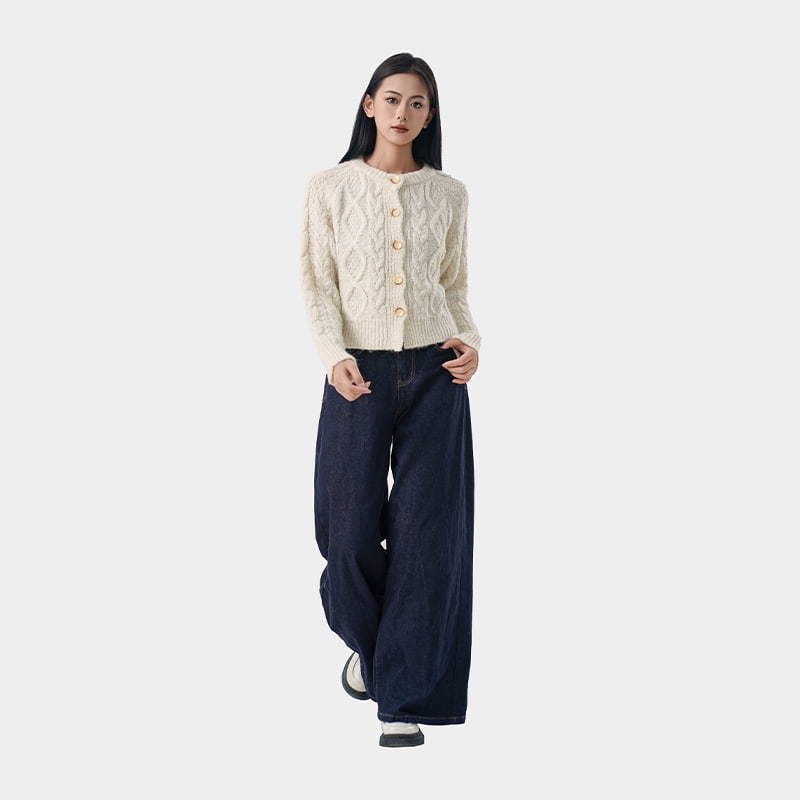 Plush Round-Neck Diamond Cable-Knit CardiganThis open-front knitted cardigan features a diamond cable pattern and soft, fluffy custom-spun yarn, offering a versatile three-season layer.View Product →
How Each One Fits Into an Outfit
Sweaters carry a softer, more relaxed message. A crew neck pullover with jeans reads casual; a fine turtleneck under a blazer reads polished; a cable knit cardigan lands somewhere in between. Jackets do more of the talking on the outside. A denim jacket, a bomber, and a tailored wool jacket each set a completely different tone even when everything underneath stays exactly the same.
A simple way to think about it: the sweater is the part people notice when you take your jacket off, and the jacket is the part people notice before you say a word.
Can a Sweater Be a Jacket?
Sort of, and this is where the two categories overlap in a useful way. A cardigan with buttons behaves much like a light jacket: you can open it, close it, and wear it as an outer layer on a mild day. A knitted jacket or a zip-front knit piece blurs the line even further. What does not change is the making. These pieces are still knitted, so they stretch and breathe, but they will not stop rain or a strong wind the way a woven shell will.
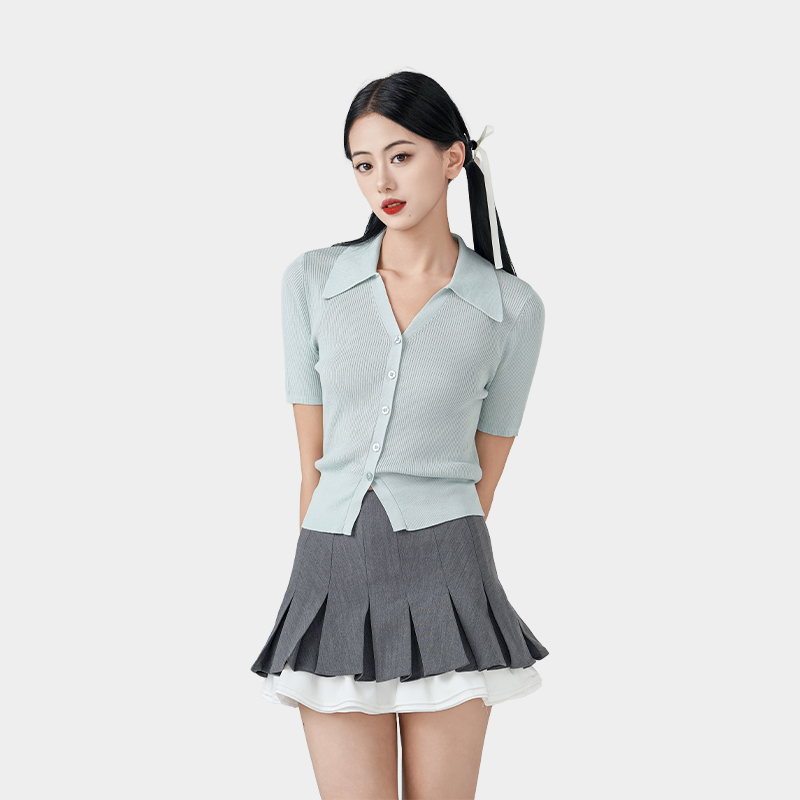 Queen Short-Sleeved Knitted Jacket with V-Shaped LapelThis short-sleeved knitted jacket uses silky, cool yarn with moisture absorption and can be worn as an inner or outer layer.View Product →
Caring for Each One
The care routine follows the construction, so it is worth keeping the two apart on laundry day.
- Sweaters: wash cool and gently, use a mesh bag if you machine wash, and dry flat so the weight of wet wool does not stretch the shoulders.
- Sweaters: fold them for storage rather than hanging, since a knit will slowly lose shape on a hanger.
- Jackets: follow the shell instructions, spot clean where you can, and re-proof technical fabrics periodically to keep the water resistance working.
- Jackets: check zippers, snaps, and seam tape now and then, because a small repair is far cheaper than replacing the piece.
A Few Notes From the Factory Floor
We build knitted garments for brands and retailers, and the questions buyers ask us are usually the same ones shoppers ask in a store. Weight, yarn, and stitch structure decide how a sweater performs, and those decisions are locked in long before the first piece comes off the machine. A 12-gauge merino pullover and a chunky hand-feel cable knit can look similar in a photo and behave nothing alike in daily wear, which is why we spend so much time on yarn selection before a single sample is approved. If you are weighing up specifications for a range, our sweater FAQ covers the questions we get most often about gauge, fiber, and finishing.
The Bottom Line
A sweater is a knitted layer that keeps warmth close to your body, and a jacket is a structured outer layer that keeps the weather away from it. They are not competitors, they are teammates. Buy the sweater for comfort, texture, and the way it feels indoors; buy the jacket for protection and shape. Wear them together on the coldest days, and you will understand immediately why people have kept both in their wardrobes for generations.
Recommended Products
-
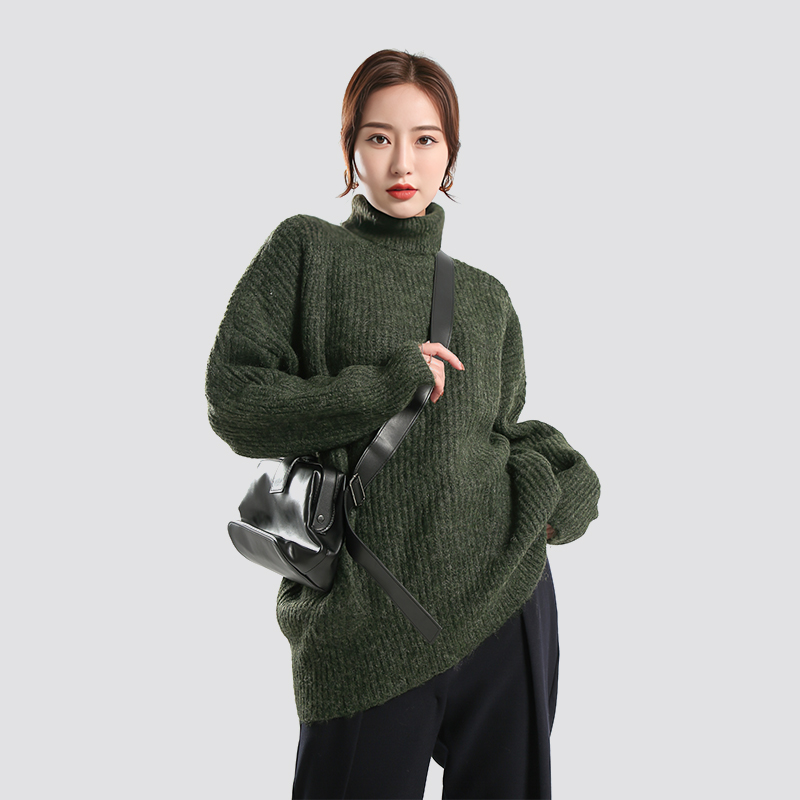
Cashmere handfeel Dark Green Wool Sweater
-
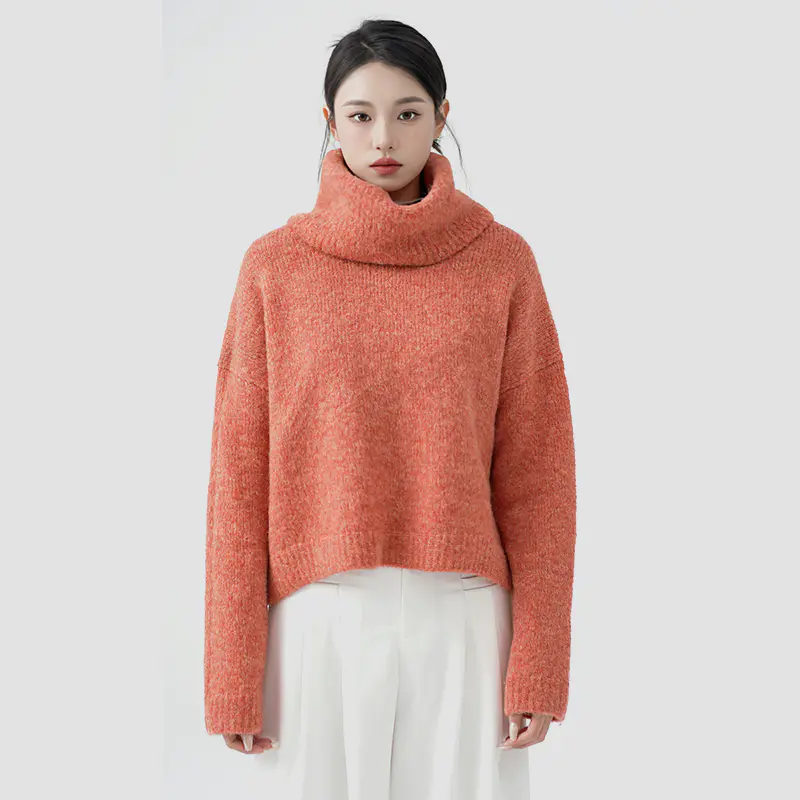
Orange Loose Neck Pullover Sweater
-
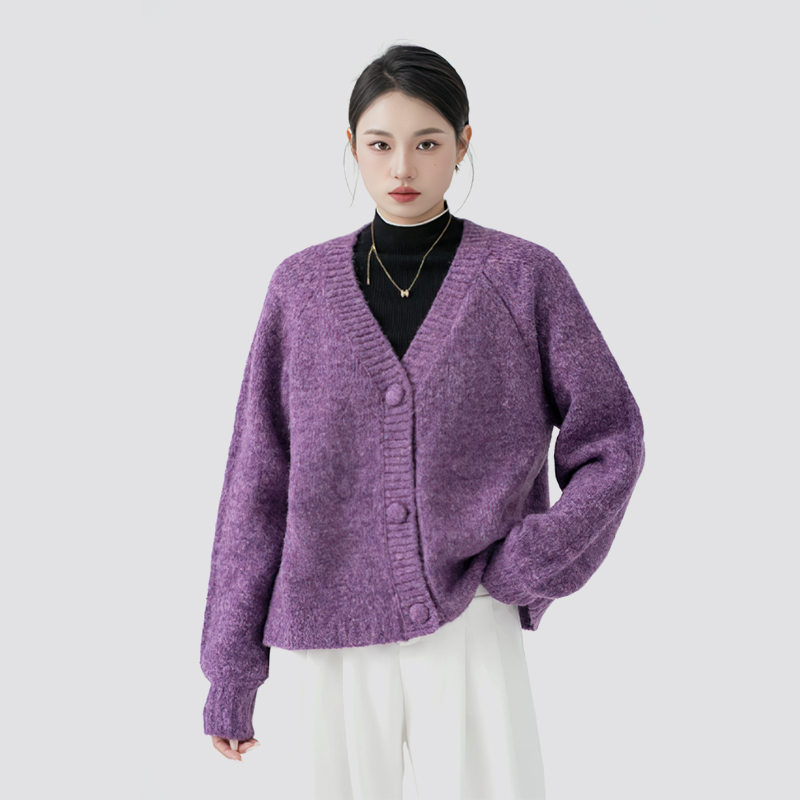
Romantic Purple Cardigan
-
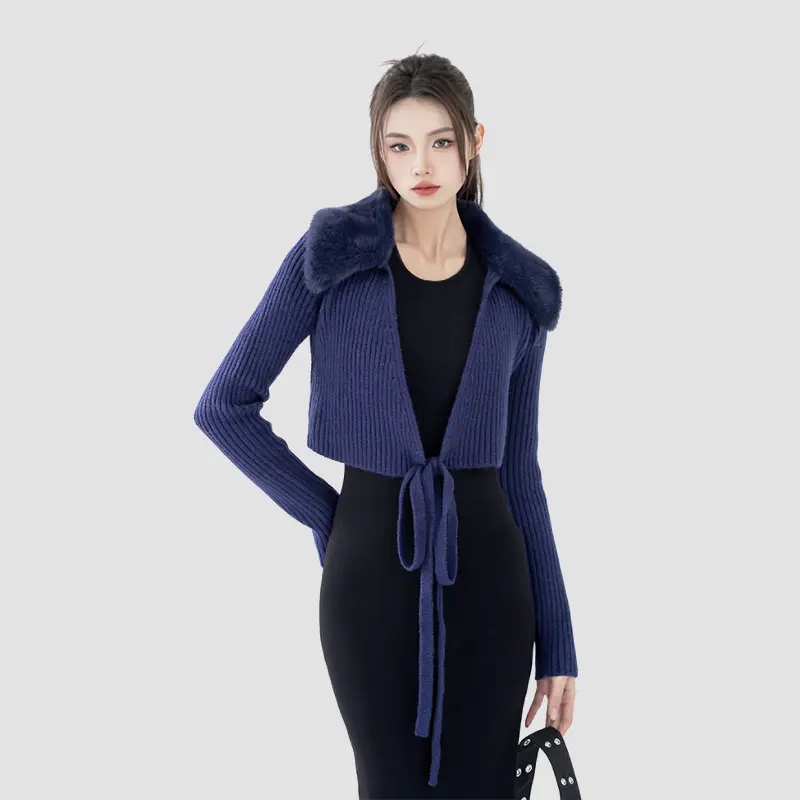
Fur Lapel Lace-up Cardigan
-
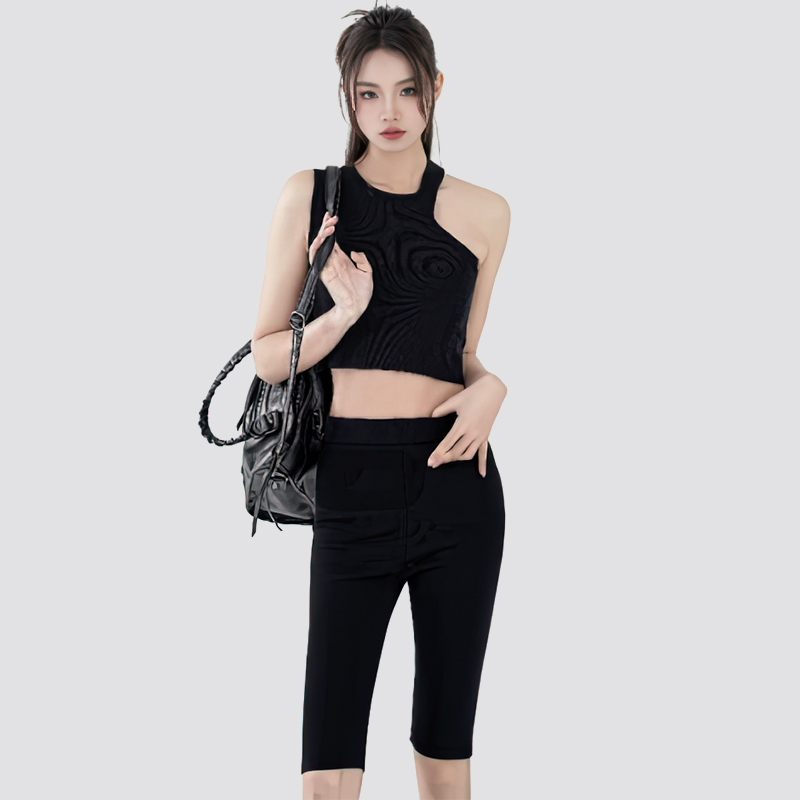
Cut Out Knitted Tank Top
-
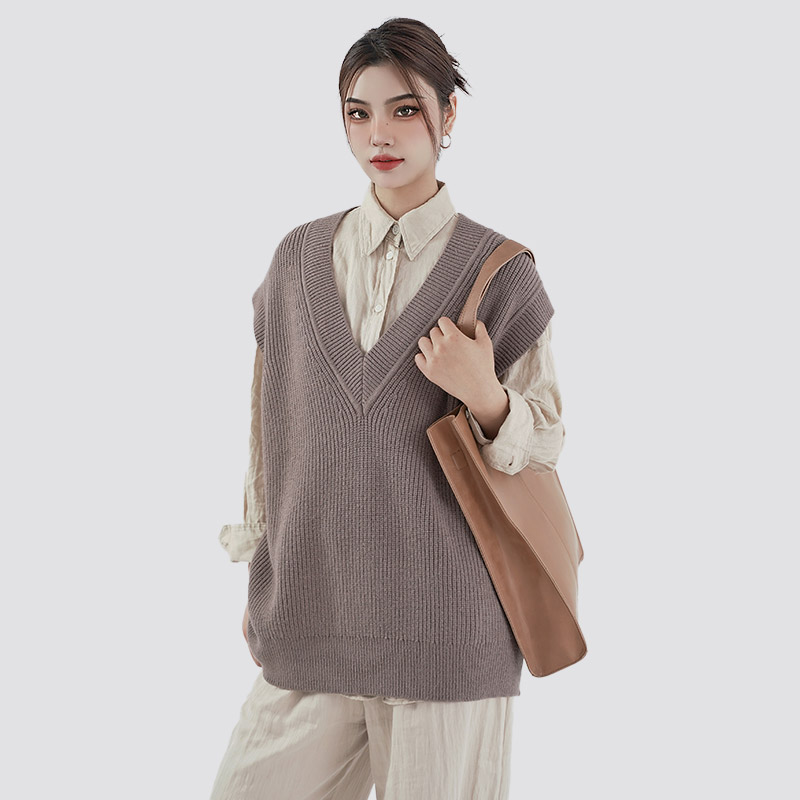
V-Neck Knitted Tank Top
-
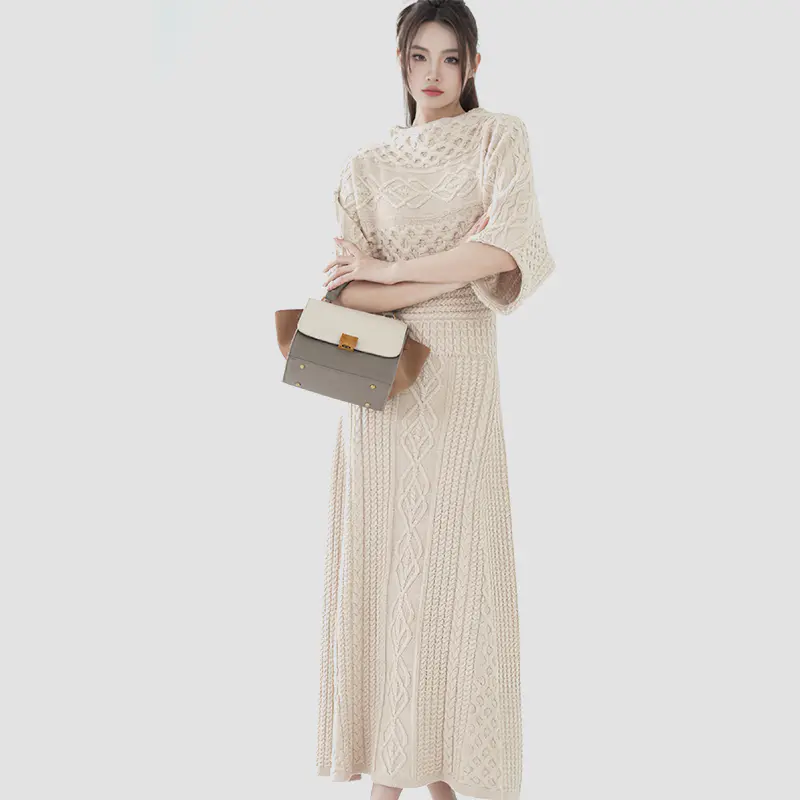
Swing Sweater Dress With Nipped Waist
-
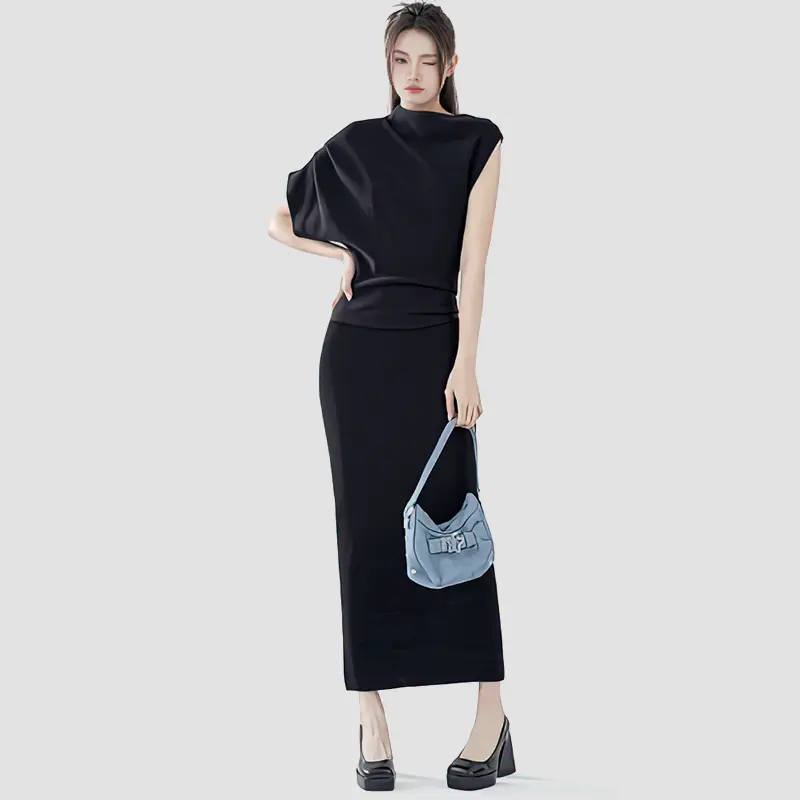
Stylish Asymmetrical Knit Long Dress
-
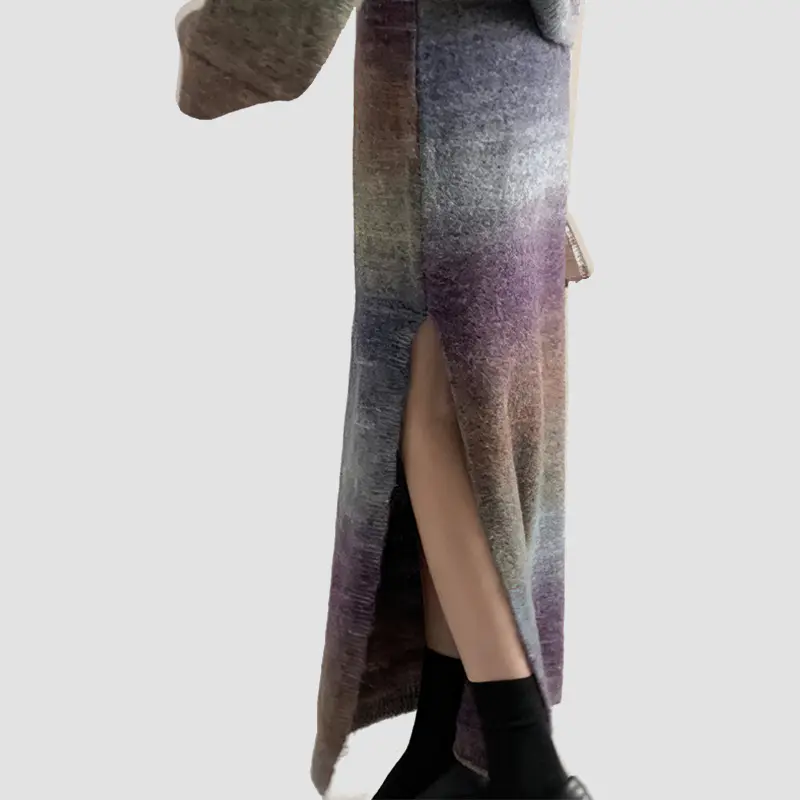
Gradient Color Side Split Half-Length Skirt
-
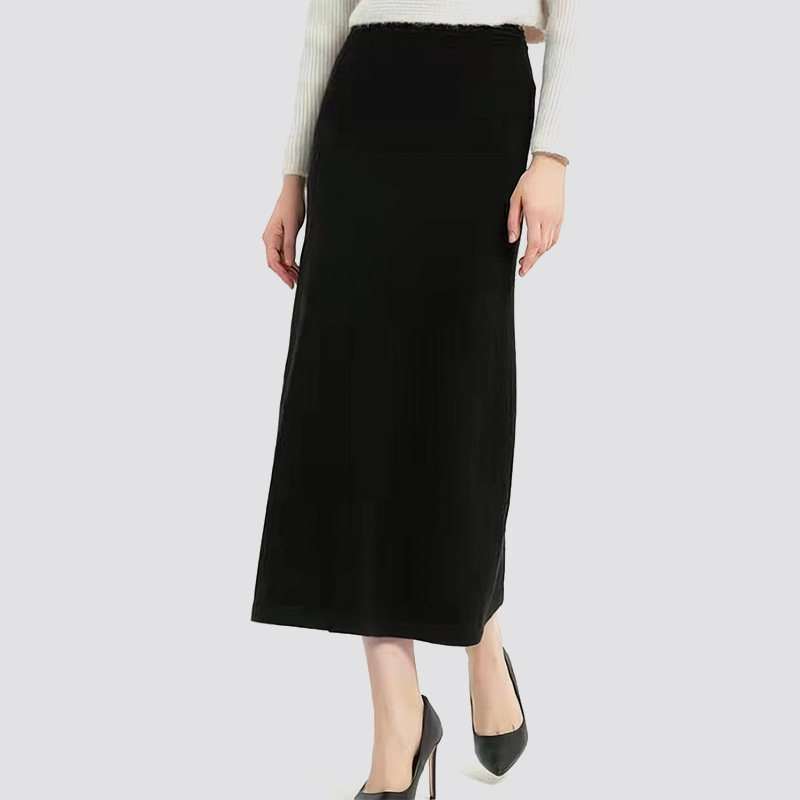
Black A-line Skirt
-
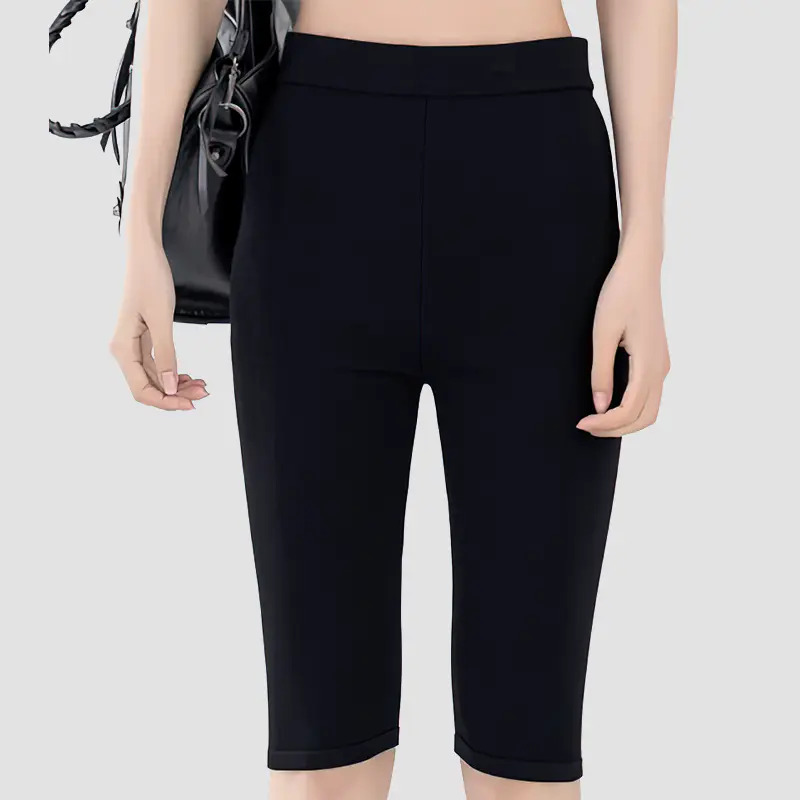
Thin Ice Silk Slimming Leggings
-
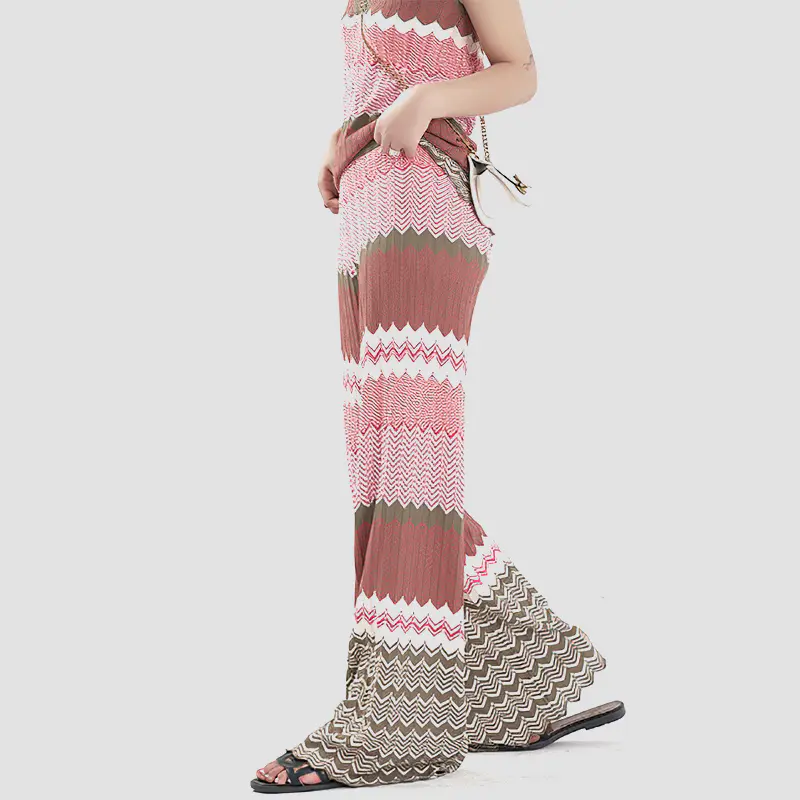
Draped Striped Loose Pants


-

Tel: +86-13913661100
-

Email: frank@sofiafashion.com
-

Add: No.886, Minfeng Road, Xushi Street, Dongbang Town, Changshu, Jiangsu, China
© 2023 Sofia Group. All rights reserved Design Custom Women's Knitted Sweaters Manufacturers
