


 English
 中文简体
中文简体 Español
Custom Embroidery Sweaters: Stitch Types, Placement, Cost and MOQ Guide
A buyer sends the factory the same chest logo that embroidered cleanly on last season's woven hoodies and asks for it on a chunky knit pullover. The sample comes back puckered, with ripples running out from every line of stitching. Nothing was wrong with the artwork; it was digitized for a stable woven fabric rather than a knit that stretches in every direction. That mismatch is the most common failure point in custom embroidery sweaters, and it is preventable at the design stage.
The short version: embroidery is among the most durable decorations you can put on a sweater, and it works on pullovers, cardigans, vests and knit dresses when the stitch file, backing and placement are engineered for stretch fabric. The decisions that decide the outcome are stitch technique, motif size relative to gauge, stabilizing method, and sampling on the production yarn itself. The rest of this guide walks through those decisions with the numbers and checkpoints experienced buyers actually use.
Content
- 1 Why Custom Embroidery on Sweaters Behaves Differently
- 2 Stitch Techniques That Hold Up on Knit Fabric
- 3 Placement, Sizing and Density Rules That Prevent Rework
- 4 The Custom Production Process, Step by Step
- 5 What Drives the Cost of Custom Embroidered Sweaters
- 6 A Sample Approval Checklist for Embroidered Knits
- 7 Turning a Design Into a Production Run
Why Custom Embroidery on Sweaters Behaves Differently
A knitted fabric is a grid of interlocking loops. Pull it sideways and it stretches; wash it and it relaxes. Embroidery thread, by contrast, has almost no give. When a dense design locks down one patch of loops while the surrounding fabric keeps moving, the result is puckering, wavy outlines and, on chunky gauges, skipped stitches or broken needles. On a woven sweatshirt the same design sits on a stable grid, which is why stitch files that perform well on fleece so often fail on knitwear.
Three adjustments solve most of these problems. Use cut-away backing instead of tear-away, because it keeps supporting the loops through wear and washing. Add a water-soluble topping on fuzzy yarns such as wool, mohair or brushed acrylic, so stitches stay on the surface instead of sinking into the pile. And reduce density: wider stitch spacing, lighter underlay and a slightly larger needle help each penetration settle between the yarn fibers instead of cutting through them. As a rule of thumb, a fine 12-gauge or 14-gauge knit can carry crisp lettering down to roughly 5 mm in height, while a chunky 5-gauge or 7-gauge sweater needs bolder shapes, thicker threads and simplified detail.
Stitch Techniques That Hold Up on Knit Fabric
Not every embroidery style behaves the same on loops, so it helps to know which approaches knitwear factories rely on most.
Flat lockstitch embroidery
The standard machine embroidery used for most logos. It gives clean edges and fine detail, and it suits left-chest marks, small text and outlined graphics. On knits it needs the density reductions described above, plus panel embroidery: the flat panel is stitched before the garment is assembled, so the fabric can be framed evenly without fighting seams.
Chain stitch
A looped stitch with a hand-finished, slightly vintage character that follows curves gracefully. Because the stitch itself is a loop, it tolerates more movement than a locked satin stitch, which makes it a good match for mid- and heavy-gauge knits and for flowing motifs such as vines, florals and script lettering.
When intarsia, jacquard or applique fits better
If a design covers a large share of the front panel, such as all-over florals, geometric bands or bold color blocks, knitting the pattern in through intarsia or jacquard usually beats embroidery on both comfort and cost, because the motif becomes part of the fabric rather than a layer on top. Applique is a middle path: a patch stitched onto the panel creates a raised, layered look with far fewer stitches. Embroidery earns its place on small to medium accents, where its texture and definition are hard to replicate.
Placement, Sizing and Density Rules That Prevent Rework
Placement drives both appearance and production risk. A left-chest mark typically runs 6 to 10 cm wide and sits about 18 to 20 cm below the shoulder seam, with the exact position confirmed on a mock-up before sampling. Center-front designs on an adult sweater rarely need to exceed 25 to 30 cm in width; beyond that, stitch count climbs quickly and the design starts fighting the garment's drape. Back yoke, sleeve and hem-corner placements suit brand marks and small graphics, and they keep dense stitching away from high-stretch zones such as the bust, elbows and side seams.
Contrast matters as much as position. Fine 3 mm lettering disappears into heathered or heavily textured yarn, so small details belong on smoother, tighter surfaces, while textured yarns carry bold shapes well. Lettering on a knit also needs to be wider and thicker than it would be on a woven sweatshirt; thin serif faces rarely survive digitizing onto a chunky gauge. To see how a simple, well-scaled motif sits on a relaxed short-sleeve knit, the piece below is a useful reference.
casual embroidery short-sleeved knitted sweater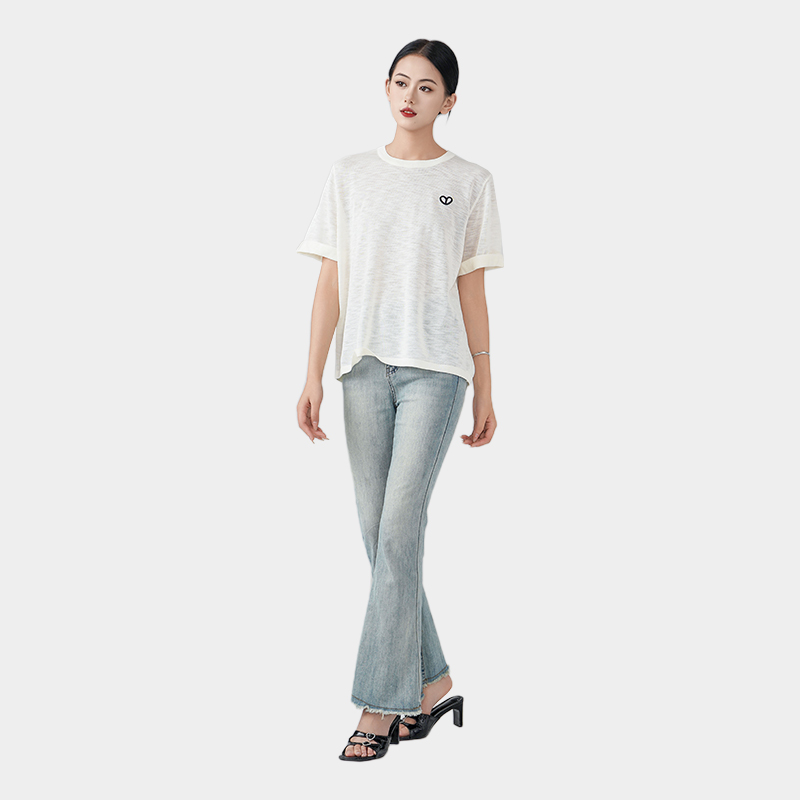 Casual Embroidered Short-Sleeve Round Neck SweaterA loose short-sleeve knit with chest embroidery, made from a Tencel linen blend that drapes and feels cool. It shows how a simple, well-scaled motif sits on a relaxed short-sleeve knit.View Product →
The Custom Production Process, Step by Step
Custom embroidered sweater production follows a predictable sequence, and most delays come from skipping a step rather than from the embroidery itself.
- Artwork submission: vector files in AI, EPS or PDF format digitize far more cleanly than screenshots; state placement, finished size and thread colors at the same time.
- Knit-specific digitizing: density, underlay and stitch direction are set differently for stretch fabric, and reusing a file built for fleece is the leading cause of puckered samples.
- Yarn and gauge selection: sample the design on the actual production yarn, because the same file reads differently on a 14-gauge fine knit and a 5-gauge chunky sweater.
- Sample approval: the factory embroiders a panel or finished garment in the chosen yarn, and you check it against the checklist in the next section.
- Bulk embroidery: panels are stitched before assembly wherever possible, which keeps hooping even and rejection rates low.
- Wash test and final inspection: pieces are washed according to the care label, then checked for puckering, thread breaks and color registration.
One commercial note: embroidery carries fixed setup costs for digitizing, framing and color changes that do not shrink much with order size. That is why per-piece prices drop noticeably between 50 and 500 pieces, and why multi-color designs cost more to run than one- or two-color marks. Confirm minimum order quantities and setup fees before artwork is finalized, so the design can be engineered to fit the budget.
What Drives the Cost of Custom Embroidered Sweaters
Unit cost is rarely about thread alone. These are the levers that move the price most.
| Cost Driver | What Changes | Practical Impact |
|---|---|---|
| Stitch count | Machine time scales with stitches | A small chest logo of 3,000 to 8,000 stitches costs a fraction of a 40,000-stitch back design |
| Thread colors | Each color adds a change and a QC point | One to three colors keep costs and error risk down; six or more slow the line |
| Placement | Panels hoop faster than finished garments | Panel embroidery lowers rejection rates compared with stitching assembled sweaters |
| Fabric gauge and yarn | Fuzzy or chunky yarns need topping and slower speeds | More handling time and a higher chance of sampling rework |
| Order quantity | Setup costs spread across units | Per-piece pricing drops sharply as quantity moves from dozens to hundreds |
The practical takeaway: simplify before you shrink. A motif redrawn with fewer stitches and colors usually reads better on a knit than a photograph-style design compressed to a smaller size, and it costs less at any quantity.
A Sample Approval Checklist for Embroidered Knits
Check the sample after it has rested, not straight off the machine, because knit fabric relaxes and hides problems until it settles.
- Lay the garment flat for 24 hours and inspect again; puckering often appears only once the fabric relaxes.
- Check registration between colors, so outlines sit cleanly inside fills without gaps or overhangs.
- Look at the reverse: bobbin thread should not show on the face, and looping on the surface signals a tension problem.
- Confirm the backing suits the fabric, with cut-away staying secure after washing and tear-away removing cleanly without distorting the loops.
- Run one wash cycle matching the care label; stitches should hold and needle penetrations should not open into holes.
- On fuzzy yarns, verify the design still reads clearly after washing; if stitches sink into the pile, the topping or density needs revision.
Samples that pass these checks rarely cause trouble in bulk, which is why experienced buyers treat sample approval as the real quality gate rather than a formality.
Turning a Design Into a Production Run
Changshu Sofia Sweater Co., Ltd. produces knitted sweaters for children, men and women, including pullovers, cardigans, vests, skirts and knit pants, from a 9,600-square-meter factory with around 150 staff as part of Sofia Group. For brand, wholesale and retail buyers, that means the base garment and the decoration are developed together instead of sending finished sweaters out for logo work afterward. More detail on the company's background is available on the company background page.
Some styles take to embroidery-style detailing especially well. Motif-driven designs with florals, heritage patterns and calligraphic curves translate into chain-stitch and flat-embroidery work with strong shelf appeal, in the spirit of this piece:
New Chinese-style knitted top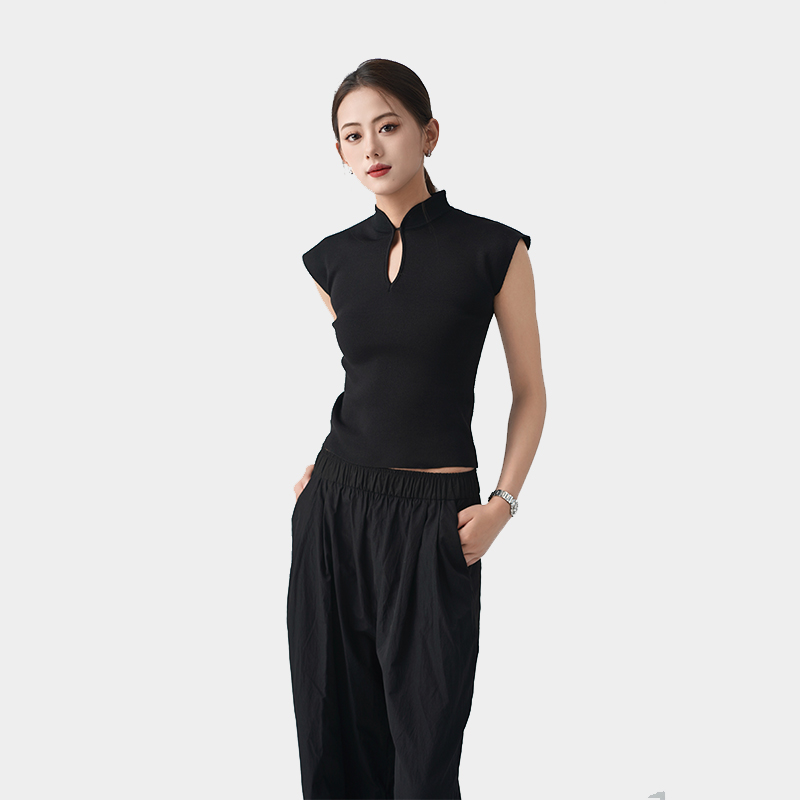 New Chinese Style Stand-Collar Knitted TopA summer-weight knit in breathable polyester-viscose yarn, with a stand collar, small openwork details and Chinese-style motifs suited to embroidery-style detailing with strong shelf appeal.View Product →
Small graphic marks work the same way. A heart, star or monogram placed high on the chest or near the hem adds character without weighing down the fabric, an approach seen on lightweight layering pieces like this:
designed love-motif knitted bottoming shirt Heart-Design Fitted Knit Bottoming ShirtA lightweight layering knit in an acrylic, polyester, nylon and wool blend featuring a heart mark, illustrating how small graphic motifs add character without weighing down fine-gauge fabric.View Product →
If you are planning an embroidered sweater program, prepare four things before requesting a quote: artwork in vector form, the target placement and size, the intended gauge or base garment, and your order quantity. Send those through the contact page and the response will be a workable cost and sample plan rather than a round of back-and-forth questions.
Recommended Products
-
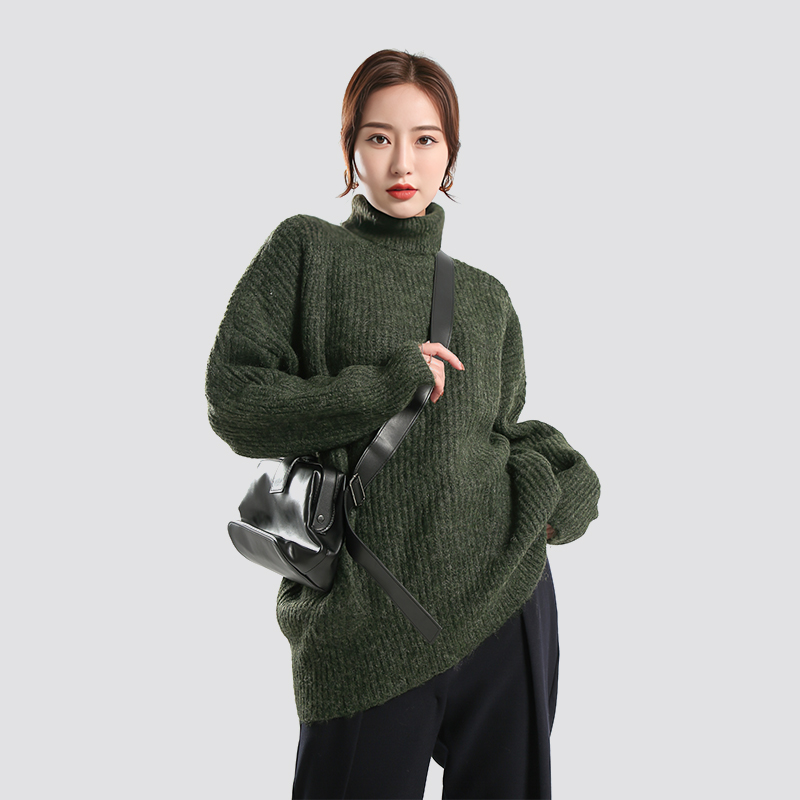
Cashmere handfeel Dark Green Wool Sweater
-
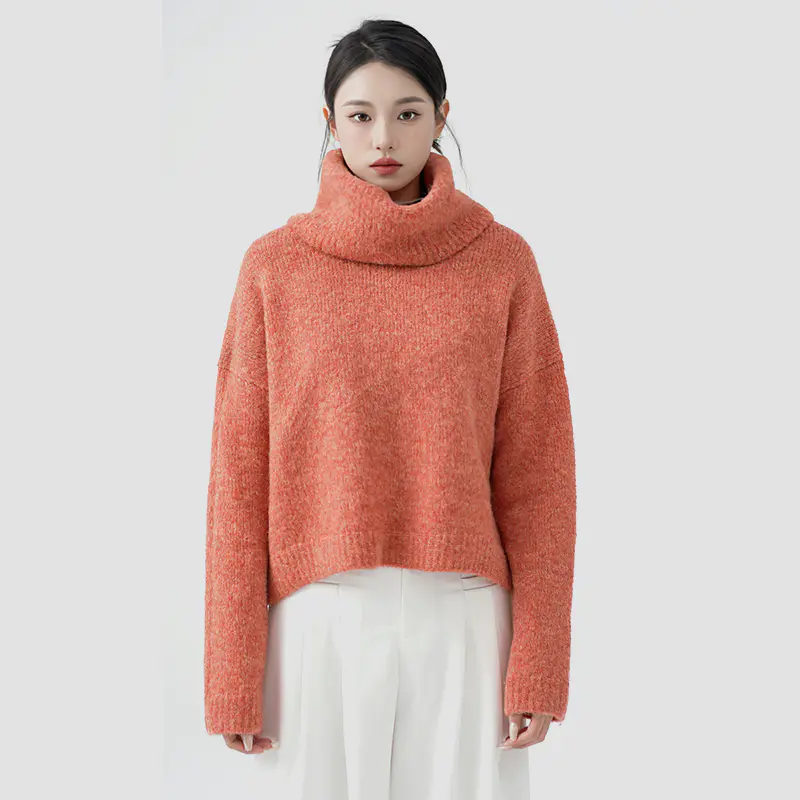
Orange Loose Neck Pullover Sweater
-
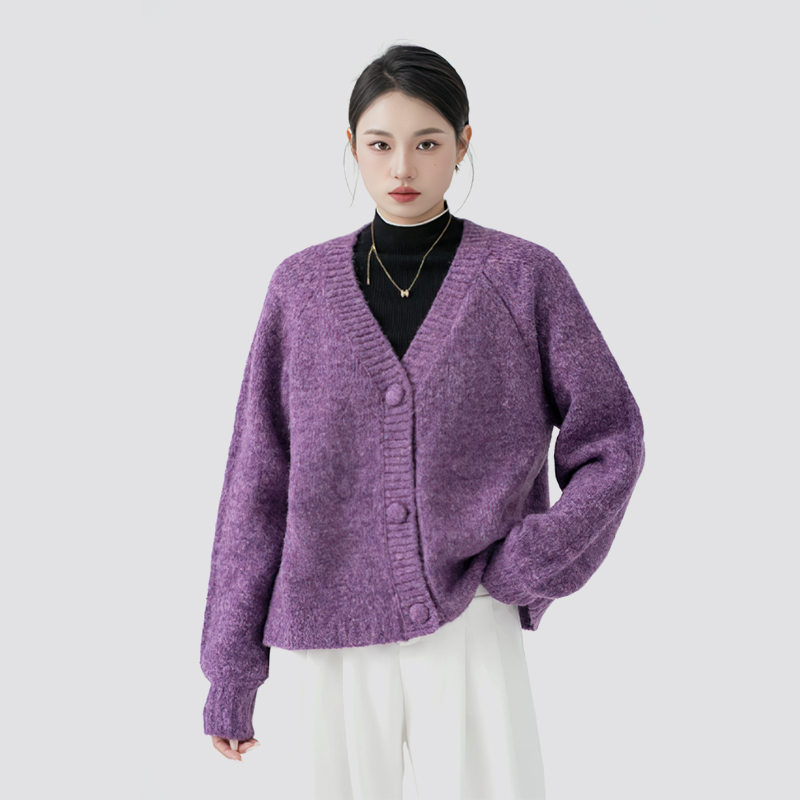
Romantic Purple Cardigan
-
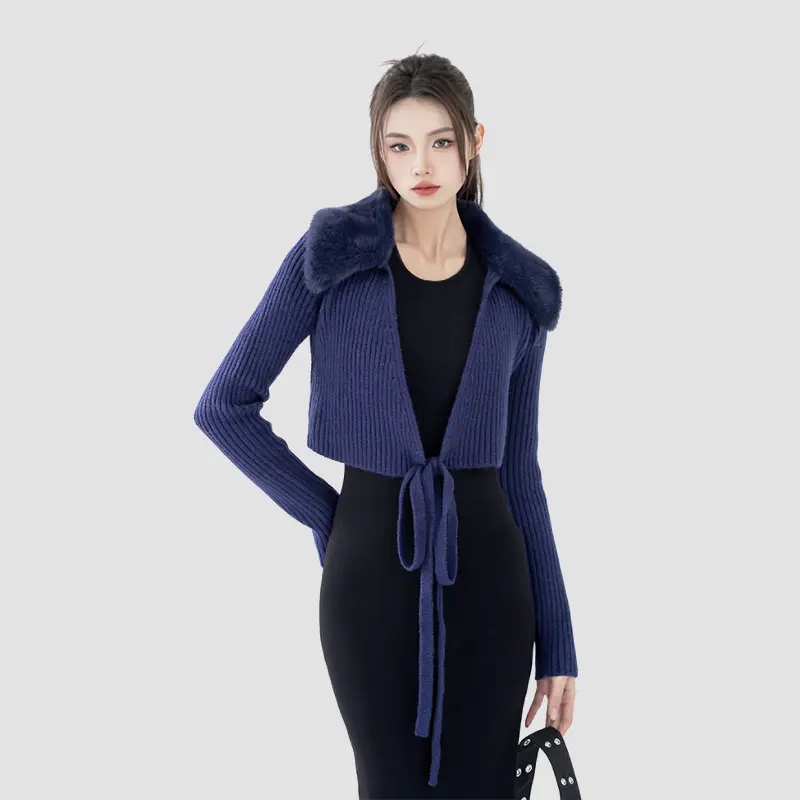
Fur Lapel Lace-up Cardigan
-
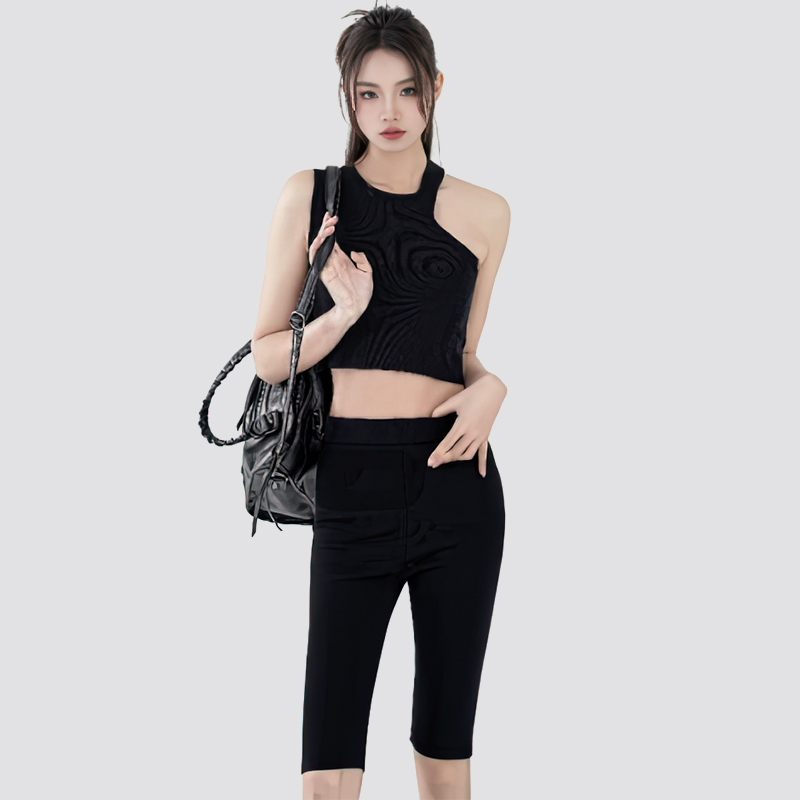
Cut Out Knitted Tank Top
-
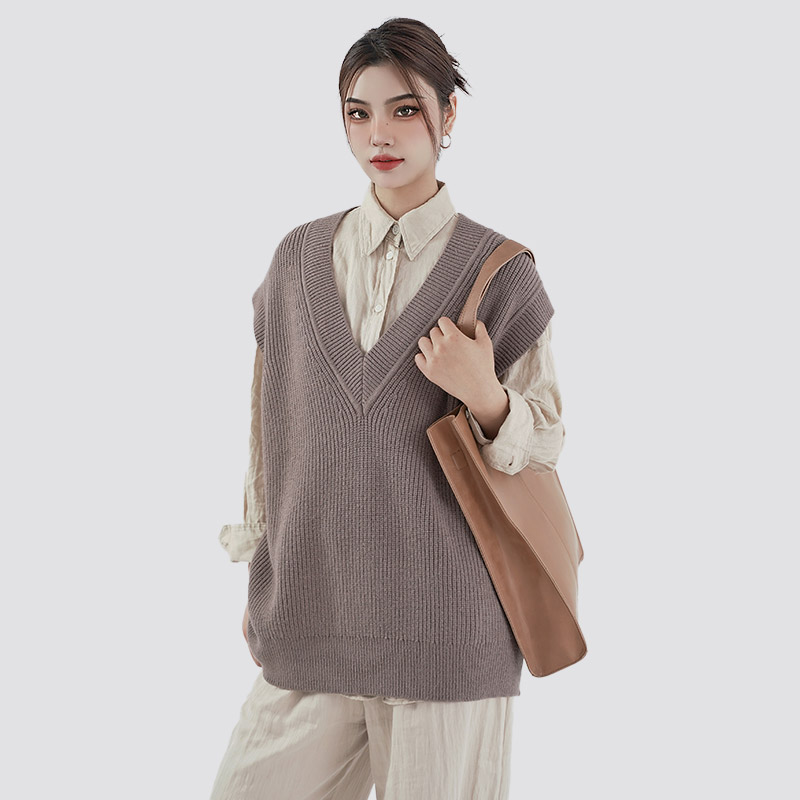
V-Neck Knitted Tank Top
-
Swing Sweater Dress With Nipped Waist
-
Stylish Asymmetrical Knit Long Dress
-
Gradient Color Side Split Half-Length Skirt
-
Black A-line Skirt
-
Thin Ice Silk Slimming Leggings
-
Draped Striped Loose Pants


-

Tel: +86-13913661100
-

Email: frank@sofiafashion.com
-

Add: No.886, Minfeng Road, Xushi Street, Dongbang Town, Changshu, Jiangsu, China
© 2023 Sofia Group. All rights reserved Design Custom Women's Knitted Sweaters Manufacturers
