


 English
 中文简体
中文简体 Español
Custom Knitwear Factory: Your Guide to OEM Sweater Manufacturing in China
Choosing a custom knitwear factory is rarely about finding the lowest quote. Knitwear is a construction-driven product: machine gauge, yarn twist, collar linking and finishing all determine how a finished sweater drapes, stretches and survives a winter of wear. The right manufacturing partner can read a sketch, a mood board or a reference sample and turn it into something your customers will buy again.
This guide walks through how custom knit production works, which decisions matter most, and the questions worth asking before you place a first order for knitted sweaters, cardigans, tank tops, skirts or pants.
Content
- 1 What a Custom Knitwear Factory Actually Does
- 2 OEM, ODM or Hybrid: Which Development Model Fits You?
- 3 Yarn Selection: Where Most of the Quality Is Decided
- 4 The Knitwear Categories a Factory Should Cover
- 5 From Brief to Bulk: How the Development Timeline Usually Runs
- 6 Quality Control and Testing Standards
- 7 MOQ, Lead Times and Capacity Planning
- 8 Questions Worth Asking Before You Commit
- 9 Why a Changshu Partner Works Well for Knitwear
- 10 Planning Your First Custom Knitwear Order
What a Custom Knitwear Factory Actually Does
A knitwear factory is not simply a sewing floor with different machines. In knitting, the fabric and the garment shape are created together. Yarn is fed into flat-bed or circular machines, and the resulting panels may be fully fashioned, cut and sewn, or produced seamlessly in one piece. Each route changes cost, fit, stretch recovery and yarn waste.
A capable factory handles the whole chain: yarn sourcing and swatch approval, gauge and stitch development, pattern making and grading, knitting, linking and trimming, washing, pressing, labelling and export packing. When one team owns that chain, problems surface during production rather than inside a container.
Technical conversation matters just as much. Ask what happens to a twelve-gauge wool blend after three washes, how pilling is controlled on a loose knit, or how a ribbed hem keeps its recovery. The answers tell you more than any showroom.
OEM, ODM or Hybrid: Which Development Model Fits You?
Most brands work with a factory in one of three ways. Agreeing on the model early saves weeks of back-and-forth during sampling.
| Model | What you provide | What the factory provides | Best suited to |
|---|---|---|---|
| Full OEM | Tech pack, measurements, yarn spec, branding | Knitting, linking, finishing, QC, packing to spec | Labels with in-house design |
| ODM | Reference styles, target price, positioning | Patterns, yarn choice, sampling, design adaptation | New brands entering a market quickly |
| Hybrid | Core silhouettes and clear must-haves | Design refinement, yarn substitution, cost engineering | Growing brands scaling a proven range |
Yarn Selection: Where Most of the Quality Is Decided
Yarn is the single biggest lever on hand feel, warmth, drape and durability. Before sampling begins, agree on fibre composition, yarn count, twist level and colourfastness requirements.
- Cotton and cotton blends, breathable and easy to care for, ideal for year-round pullovers and tank tops.
- Merino wool and wool blends, warm and resilient with excellent shape memory.
- Cashmere and cashmere-touch blends, chosen for softness and a luxury hand feel at finer gauges.
- Viscose, lyocell and tencel, offering fluid drape and a cool touch for skirts, dresses and summer knits.
- Acrylic and synthetic blends, used for colour stability, abrasion resistance and cost control.
- Recycled and responsible fibres, increasingly required by brands with sustainability commitments.
Custom-spun yarn gives the most control, because the spinner can adjust blend, twist and dye lot so a garment behaves consistently across repeat orders. Ask whether your factory can specify custom yarn or only buy from open stock.
The Knitwear Categories a Factory Should Cover
A very narrow range is a warning sign. Brands selling a coordinated collection need one partner who can build tops, layering pieces and bottoms from the same yarn and colour palette.
Knitted Pullovers and Tops
Round neck, v-neck, turtleneck, cable, ribbed and dropped-shoulder styles, from light summer knits to chunky winter weights. This is usually the highest-volume part of a programme.
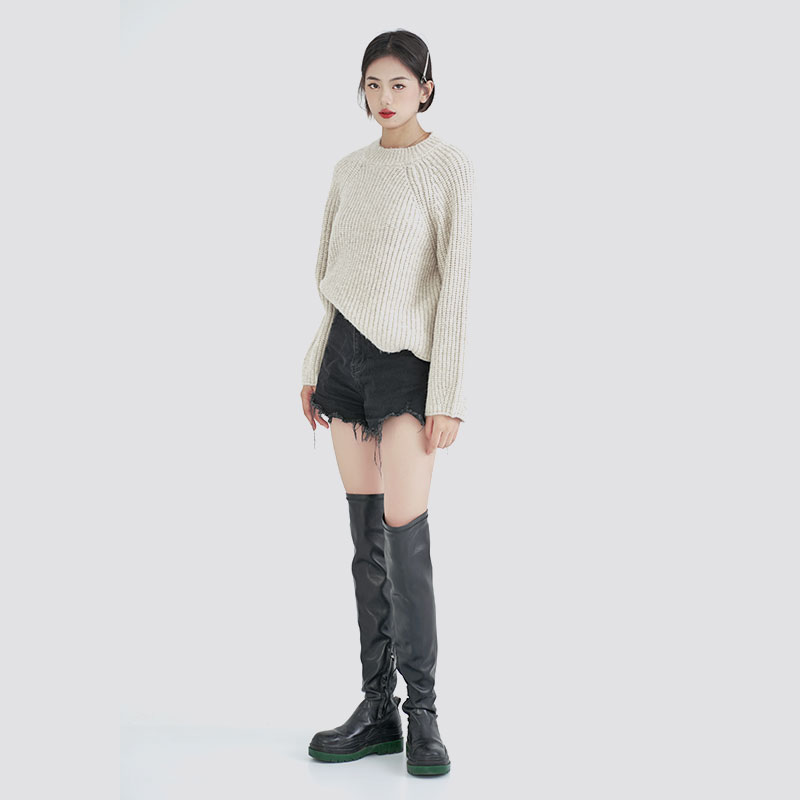 Autumn Casual round neck loose knitted pullover sweaterRecommended ProductsView Product →
Knitted Cardigans
Button-through, zipped, open-front, plaid and fur-trimmed cardigans all depend on precise panel shaping and a stable button placket that will not gape after wear.
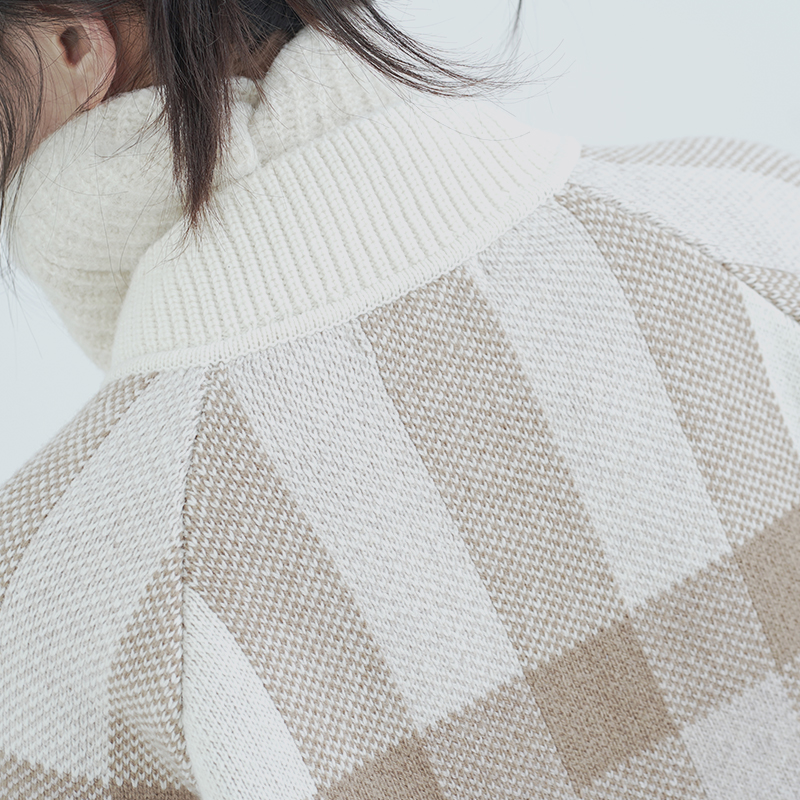 Big brand plaid knitted cardiganProduct Parameter FabricView Product →
Skirts, Dresses and Knitted Pants
Long knitted skirts, A-line skirts, midi dresses and wide-leg knitted pants demand different elasticity control than tops, because they must hold their shape without gripping the body.
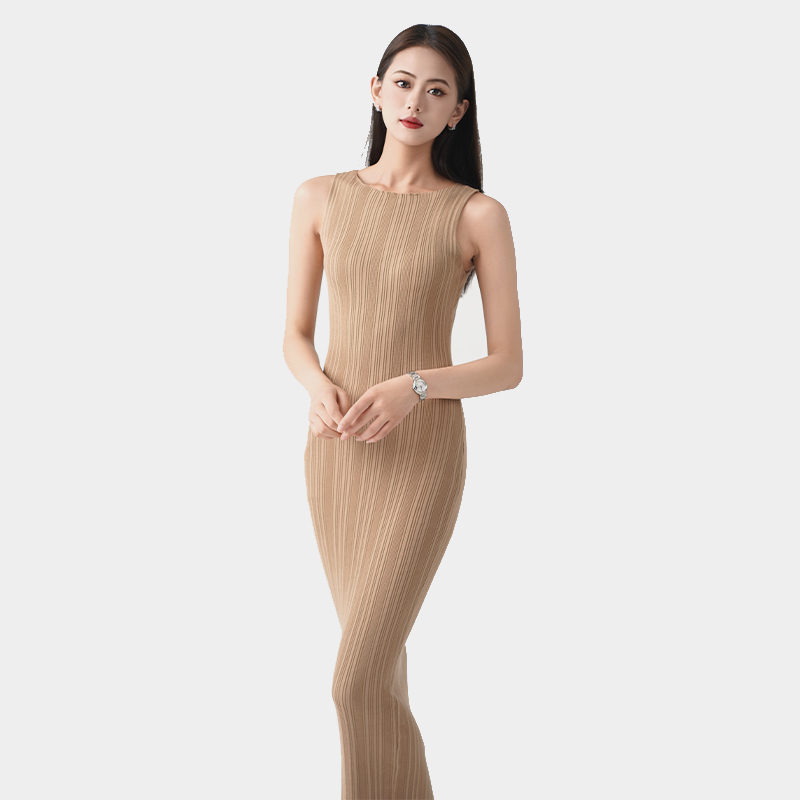 Elegant knitted long skirtMoisturizing and light texture, the fabric is made of a golden ratio blend. After high-density weaving, the garment is soft and full of bones, with exquisite texture, ...View Product →
From Brief to Bulk: How the Development Timeline Usually Runs
Timelines vary with complexity, but a straightforward custom knitwear programme follows a predictable path.
- Brief and feasibility review, where you share references, target price, quantity and market.
- Yarn and gauge proposal, with recommended fibres, counts and machine gauge.
- Swatch approval to confirm hand feel, colour and stitch structure.
- Proto sample to check silhouette, fit and construction.
- Fit and revision rounds, where measurements are adjusted and the pattern is finalised.
- Size set and pre-production sample to verify grading across the full size range.
- Bulk production, inspection and shipping, including finishing, QC and export packing.
Sampling is where surprises are cheapest to fix, so budget two to three revision rounds for a new silhouette.
Quality Control and Testing Standards
Ask to see the inspection routine rather than only a certificate. Useful checkpoints include:
- Incoming yarn inspection for count, colour and lot consistency.
- In-line checks on stitch density, panel dimensions and linking quality.
- Measurement verification against the approved size chart.
- Colourfastness, pilling and shrinkage testing for the agreed blend.
- Needle and metal detection before packing.
- Final AQL inspection with photo documentation before shipment.
MOQ, Lead Times and Capacity Planning
Minimum order quantities are driven by yarn minimums and machine set-up time, not by factory goodwill. For custom-dyed yarn, MOQ is usually set per colour per style, while using stock yarn or an existing colour card can lower it considerably.
Typical lead times run four to six weeks for sampling and eight to twelve weeks for bulk once the pre-production sample is approved. Peak season, roughly June to October for autumn and winter deliveries, compresses capacity, so book production slots early.
It also helps to understand a factory's real capacity. A workshop of around 9,600 square metres with roughly 150 staff can support mid-sized programmes reliably while still handling multi-colour ranges. Ask how many machines run in-house, how many shifts operate, and what share of capacity is already committed for your delivery window.
Questions Worth Asking Before You Commit
- Which gauges and machine types do you run in-house, and what do you subcontract?
- Can you develop from a tech pack, a reference sample, or only from a full pattern?
- Who sources the yarn, and can you work with a nominated supplier?
- What is your realistic sampling turnaround during peak season?
- How do you handle repeat orders and shade continuity between lots?
- What are your payment terms, inspection rights and shipping documentation like?
A factory that answers these plainly, with examples, is usually one that will communicate well when something needs solving mid-production.
Why a Changshu Partner Works Well for Knitwear
Changshu, in Jiangsu Province, sits inside one of China's densest knitwear clusters. Yarn spinners, dyers, trim suppliers and knitting workshops are within short driving distance, which shortens sampling cycles and makes yarn quality easier to control.
Our own operation, Changshu Sofia Sweater Co., Ltd., is part of Sofia Group, founded in 2006. We knit children's, men's and women's sweaters in a 9,600 square metre facility with around 150 employees, covering pullovers, cardigans, tank tops, skirts and knitted pants. Our sister company produces nonwoven protective products, a different business with the same working habit: documented processes, stable output and clear communication. Our team works in English, Chinese and Spanish, and we exhibit regularly to stay close to buyers in different markets.
You can review the workshop setup on our factory page and see how sampling, knitting and finishing are organised under one roof.
Planning Your First Custom Knitwear Order
Start with one or two styles, a clear target price and a realistic delivery window. Approve yarn and swatches before sampling, keep revision feedback consolidated rather than piecemeal, and lock measurements before bulk. Handled properly, a first order becomes a template for every season that follows.
If you are ready to discuss a programme, send your references, quantities and target market through our contact page and we will come back with yarn options, gauge recommendations and a sampling plan.
Recommended Products
-
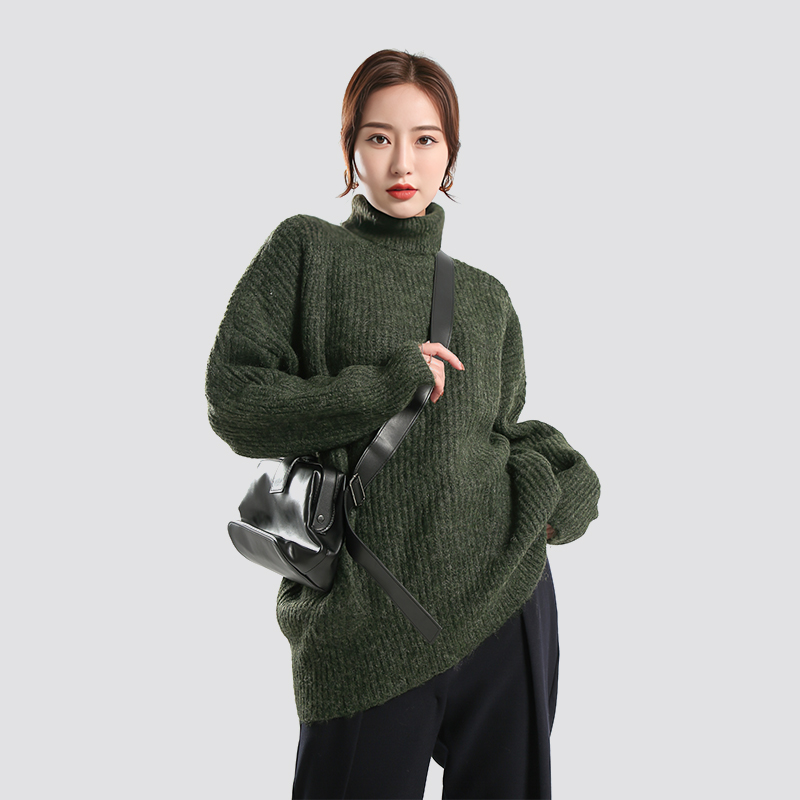
Cashmere handfeel Dark Green Wool Sweater
-
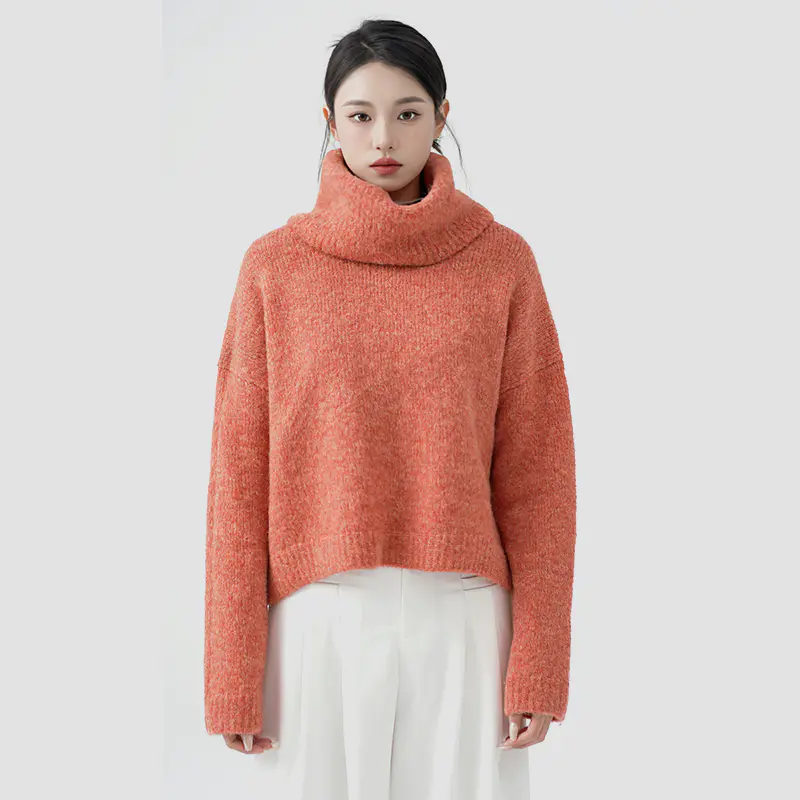
Orange Loose Neck Pullover Sweater
-
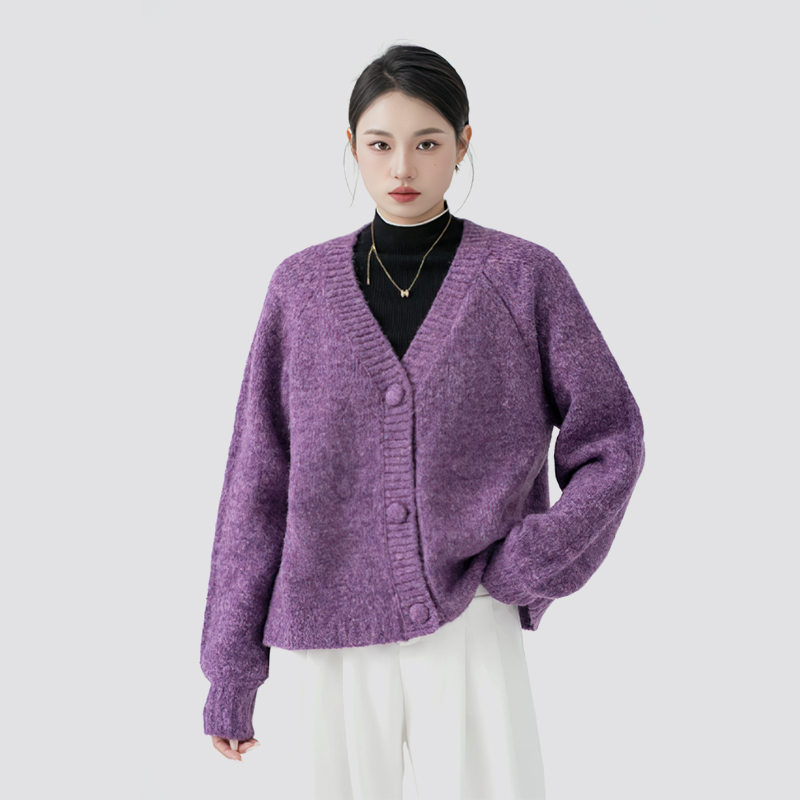
Romantic Purple Cardigan
-
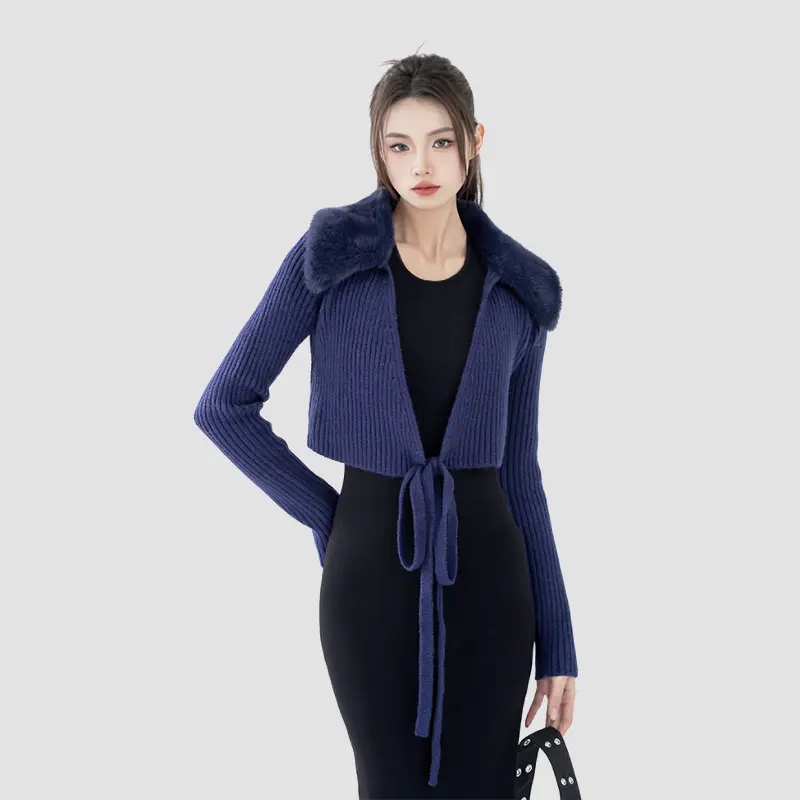
Fur Lapel Lace-up Cardigan
-
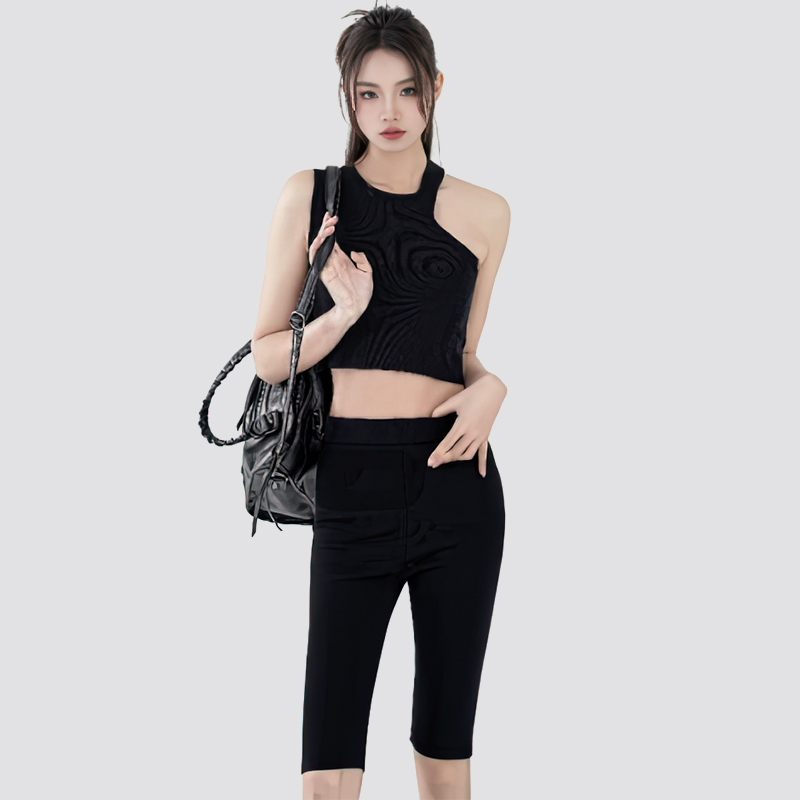
Cut Out Knitted Tank Top
-
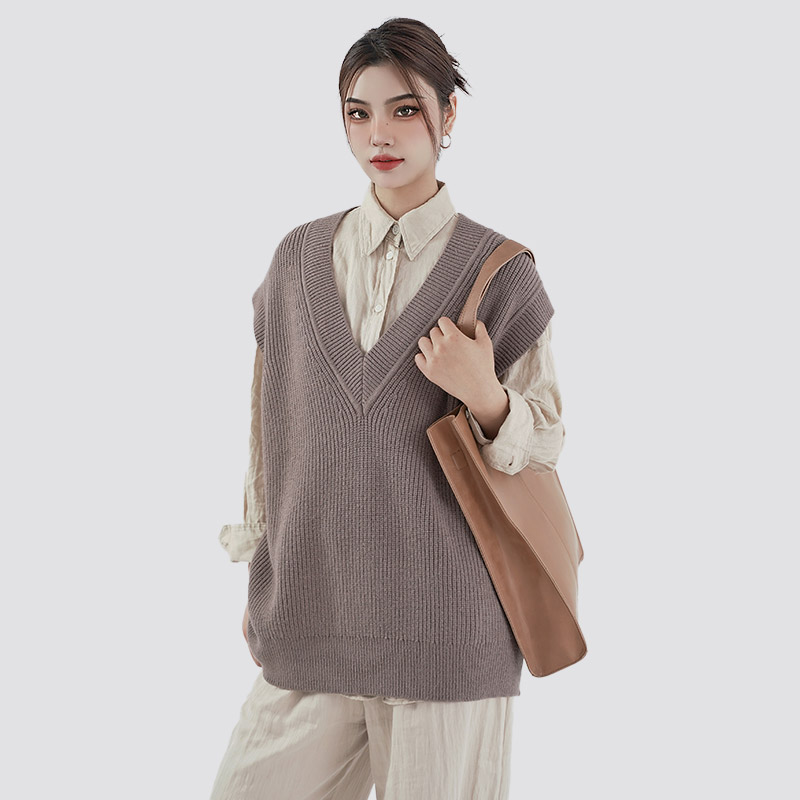
V-Neck Knitted Tank Top
-
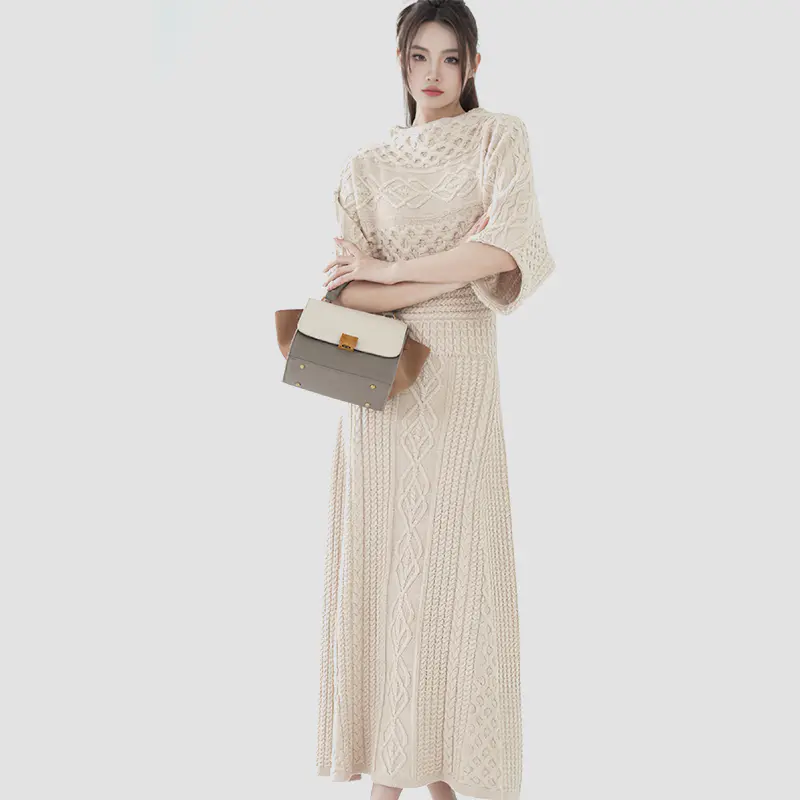
Swing Sweater Dress With Nipped Waist
-
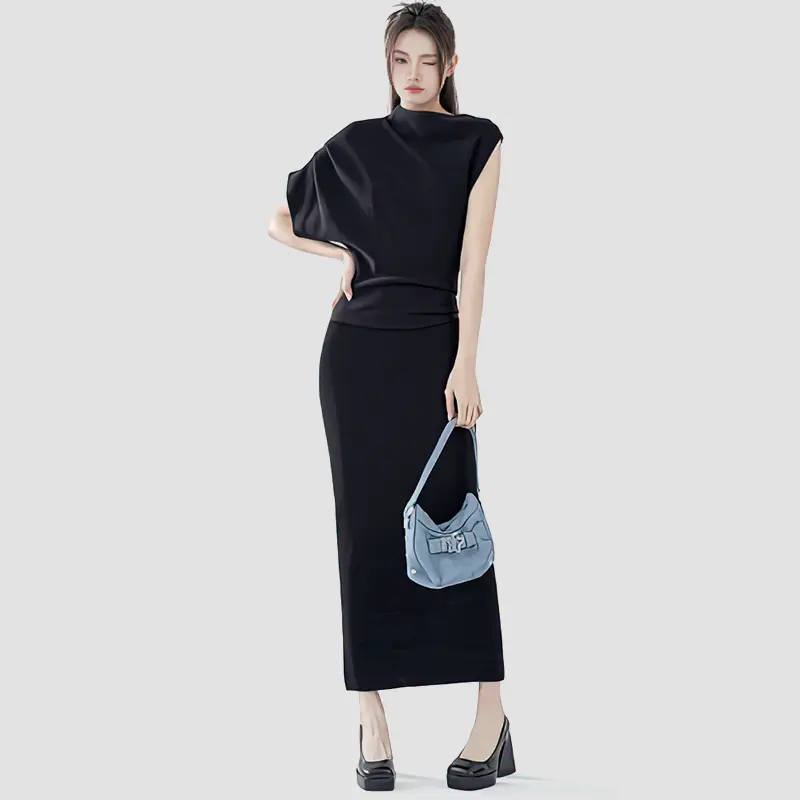
Stylish Asymmetrical Knit Long Dress
-
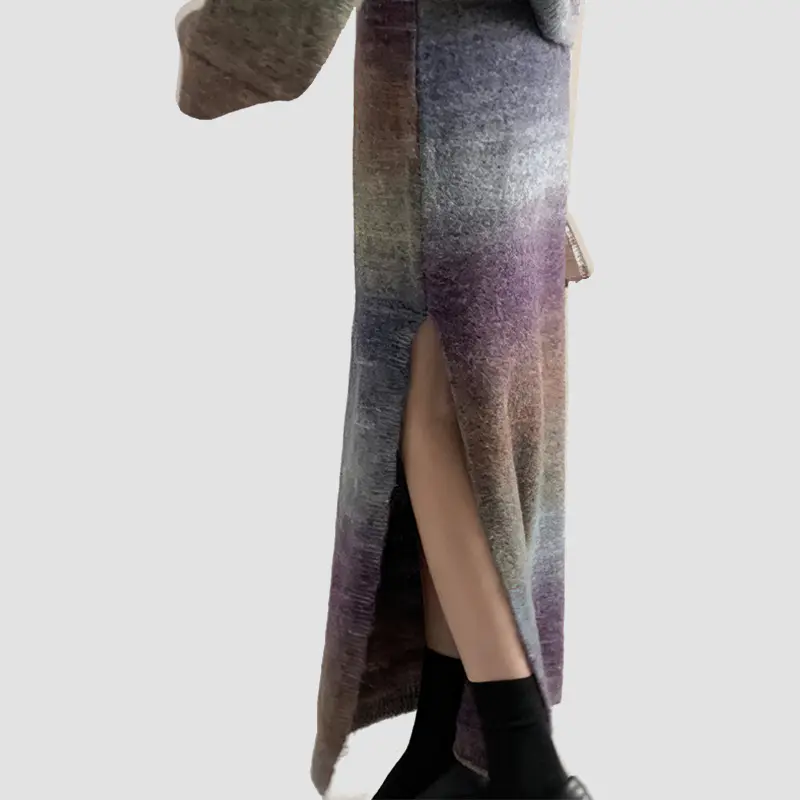
Gradient Color Side Split Half-Length Skirt
-
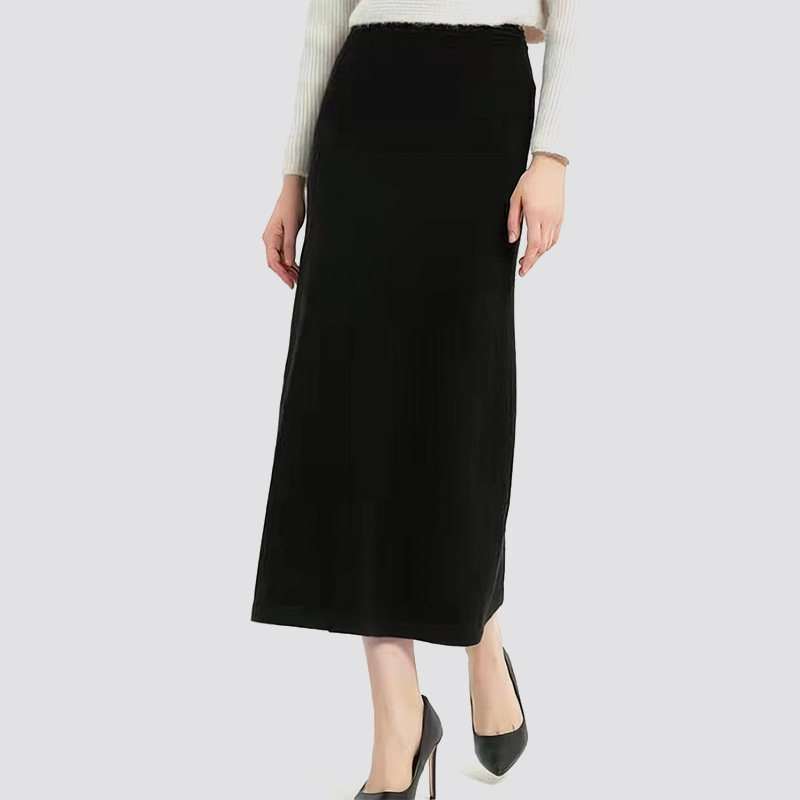
Black A-line Skirt
-
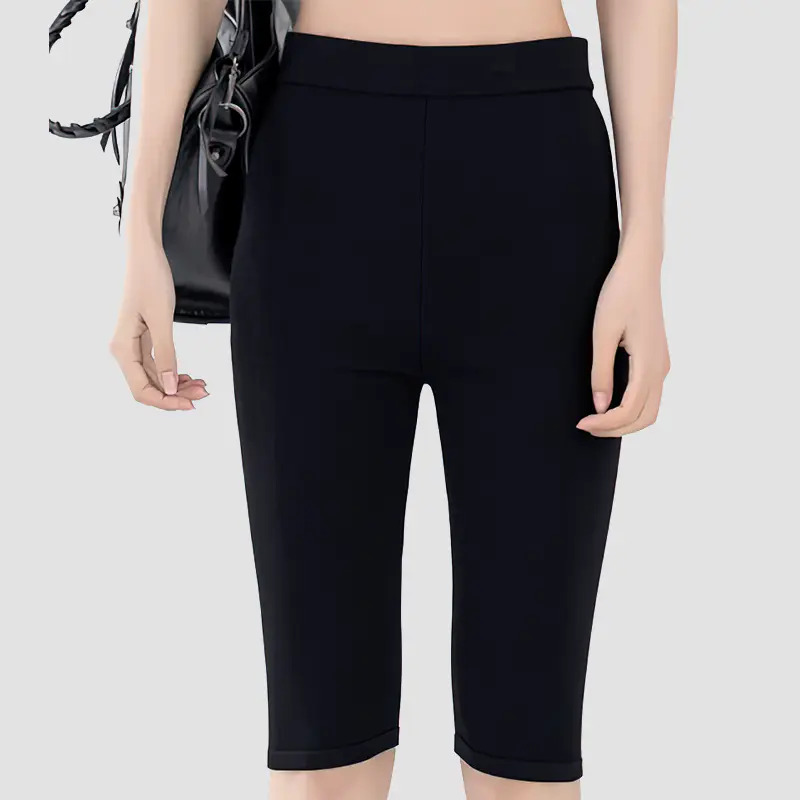
Thin Ice Silk Slimming Leggings
-
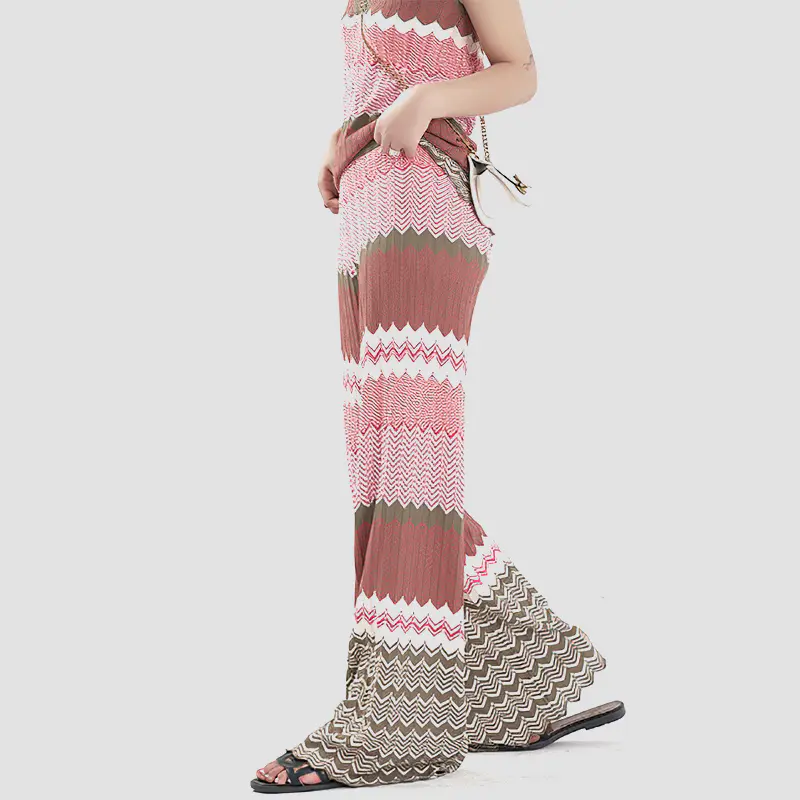
Draped Striped Loose Pants


-

Tel: +86-13913661100
-

Email: frank@sofiafashion.com
-

Add: No.886, Minfeng Road, Xushi Street, Dongbang Town, Changshu, Jiangsu, China
© 2023 Sofia Group. All rights reserved Design Custom Women's Knitted Sweaters Manufacturers
